Choosing the Right Taxi from Barcelona Airport
Arriving at Barcelona-El Prat Airport with luggage, a schedule and a city you may not know well can make the first ride feel more important than it looks. The right barcelona airport taxi is usually the one that matches your route, timing, luggage and tolerance for queues. A clear approach before you leave the terminal helps you avoid confusion at the rank and makes the ride into Barcelona city centre more predictable.
Work out what kind of ride you need
Start with the practical shape of the journey. A solo traveller with a cabin bag has different needs from a family with suitcases, a pushchair and a late arrival. Note the number of passengers, the amount of luggage and the final address. If the drop-off is in a narrow old street, a larger vehicle may be awkward, while a group with several cases may not fit comfortably in a small car.
Think about timing too. A daytime arrival gives you more room to compare options. A late flight, an early morning meeting or a connection with children in tow calls for a simpler decision. The aim is not to find a perfect answer in the abstract, but to choose a ride that fits the moment.
Decide where you want to arrange it
There are two broad routes. You can use the taxi rank after landing, or arrange transport before you fly. Both can work well, and the better choice depends on how much certainty you want.
Using the taxi rank suits travellers who prefer to decide after they have collected bags and cleared the terminal. It can be straightforward when the queue is moving and your destination is easy to explain. It may feel less relaxed when several flights arrive at once, or when you need a particular vehicle size.
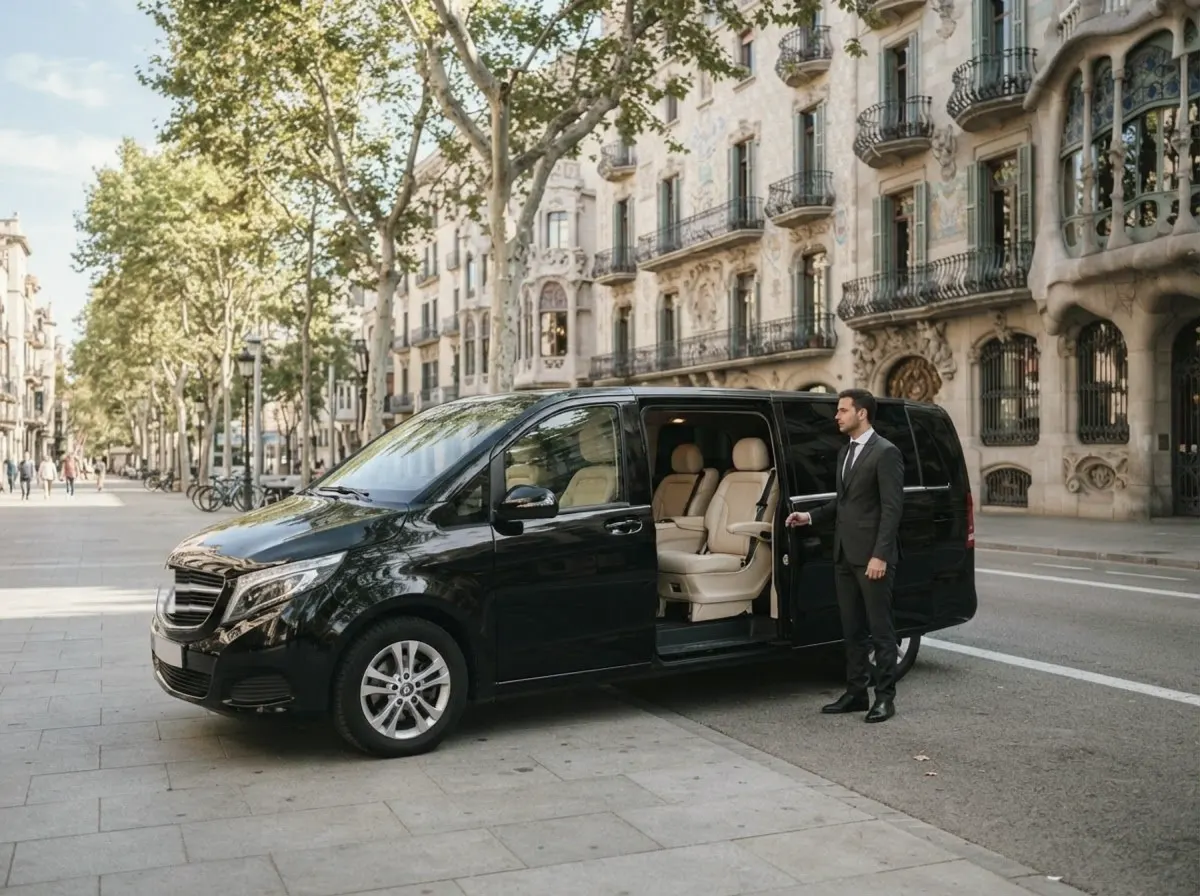
Arranging ahead suits people who want the airport pick-up procedure settled before takeoff. This is where a name such as chauffeurhirebarcelona.com may come up while you compare providers. Keep the comparison simple: check what is included, what details are requested and how the meeting point is described. Do not assume that every arrangement works the same way.
Check the price basis before you commit
Taxi pricing can be misunderstood. A metered fare is calculated by the journey, with the meter running according to the route and conditions. A pre-arranged transfer may be quoted as a fixed price for a stated route. Each has its place. A metered fare can be fair for a short, direct trip when traffic is light. A fixed price can be easier to budget when you know exactly where you are going.
Ask how the taxi fare estimate is worked out and whether it covers the whole trip. Look for supplement charges that may apply, such as airport fees, luggage handling, late travel or a change of destination. A night-time surcharge may also matter if your flight lands late. None of this is meant to make the process sound complicated. It simply helps you judge whether the amount you are shown reflects the journey you want.
If a price sounds too vague, pause and ask for clarity before getting in. A professional driver or booking service should be able to explain the basis in plain terms. If the explanation shifts once the journey starts, that is a warning sign.
Confirm the meeting details
Confusion at the airport is often about location, not transport. Before you land, know whether the meeting point is inside the arrivals hall, outside a marked door, or at a specified taxi rank. Terminal layout matters, so check which terminal your flight uses and which exit you should head for. The words on a confirmation can sound clear but still leave room for doubt if the terminal has several exits.
For a pre-booked ride, look for a clear method of contact and a simple description of the vehicle. The driver should not need you to wave down random cars, and you should not need to guess who is waiting. If a name board is used, make sure the name is spelled correctly. If a phone number is provided, keep it somewhere easy to reach after landing rather than buried in email.
chauffeurhirebarcelona.com is one name that may appear when researching airport transport, but the broader habit is useful whatever provider you consider: confirm the exact place, the time and the vehicle details in advance. That small check removes much of the stress from the first minutes after arrival.
Look at the vehicle and the driver
Once you are at the pickup point, take a moment to match what you see with what you were told. The vehicle type should suit the passengers and bags. A car that looks too small may mean someone sits uncomfortably or luggage ends up on a lap. If that happens, say so before leaving the airport and ask whether a larger option is available.

The driver should be easy to identify and willing to confirm your destination. A short, calm exchange at the start prevents problems later. State the address clearly, and if it is a hotel, give the hotel name as well as the street. For apartments or private addresses, have the full address saved offline so you are not relying on a weak signal.
Notice the general condition of the car and the way the driver listens. Clean, orderly transport and a steady manner are good signs. That does not mean judging a vehicle by luxury alone. A simple car can be perfectly suitable if it is appropriate, legal and driven with care.
Ask about the route without turning it into a negotiation
Barcelona traffic can change the shape of a short journey. A driver may choose a route that avoids a busy area, even if it looks longer on a map. It is reasonable to ask whether the route is direct and whether there are known delays. It is not helpful to argue over every turn while the car is moving.
If you have a fixed price, confirm whether it is tied to a specific destination. A stop for food, a detour to another hotel or a change to a different district may alter the agreement. If you have a metered fare, traffic conditions can affect the final amount. Keep the discussion brief and practical before the car pulls away.
For Barcelona city centre, be specific about the drop-off. Some streets restrict vehicles, and a few hotels have entrances that are easy to miss. A clear address and a calm driver make this part much smoother.
Keep payment and documents simple
Before the ride ends, check how payment works. Ask whether cards are accepted, whether there is a fee for a particular payment method and whether a receipt is available. This matters even more if the trip is for work or if you need to claim the cost later. If cash is needed, keep notes accessible rather than packing them away at the bottom of a bag.
Keep your phone charged enough for maps, messages and contact details. Save the address of your destination and the pickup confirmation in a place you can open quickly. Paper backup also helps if a battery runs down at the wrong time. None of these steps takes long, yet each one can prevent a small issue from becoming a long one.

Know what to do if something feels wrong
If the driver refuses to use the meter where that should apply, gives a changing price, or cannot explain the pickup, stop and reassess. In a busy airport environment, it is better to return to a clearly marked taxi rank or contact the provider you arranged with than to continue in a car that does not feel right.
If you have pre-arranged transport and the vehicle does not appear, follow the contact instructions you saved. Give the driver a little time to reach the agreed point, especially if terminal exits are busy. Stay in a public, well-lit area while you wait. Clear communication usually resolves the issue quickly.
Choosing well is less about chasing the cheapest option and more about removing uncertainty. Define the trip, choose how to arrange it, understand the price basis, confirm the pickup point, check the vehicle and settle payment details. Follow those steps in order and a barcelona airport taxi becomes a routine part of the journey rather than a first test of your travel nerves.